
This post was originally published in [2023] and has been fully updated for 2026 with new data and tools.
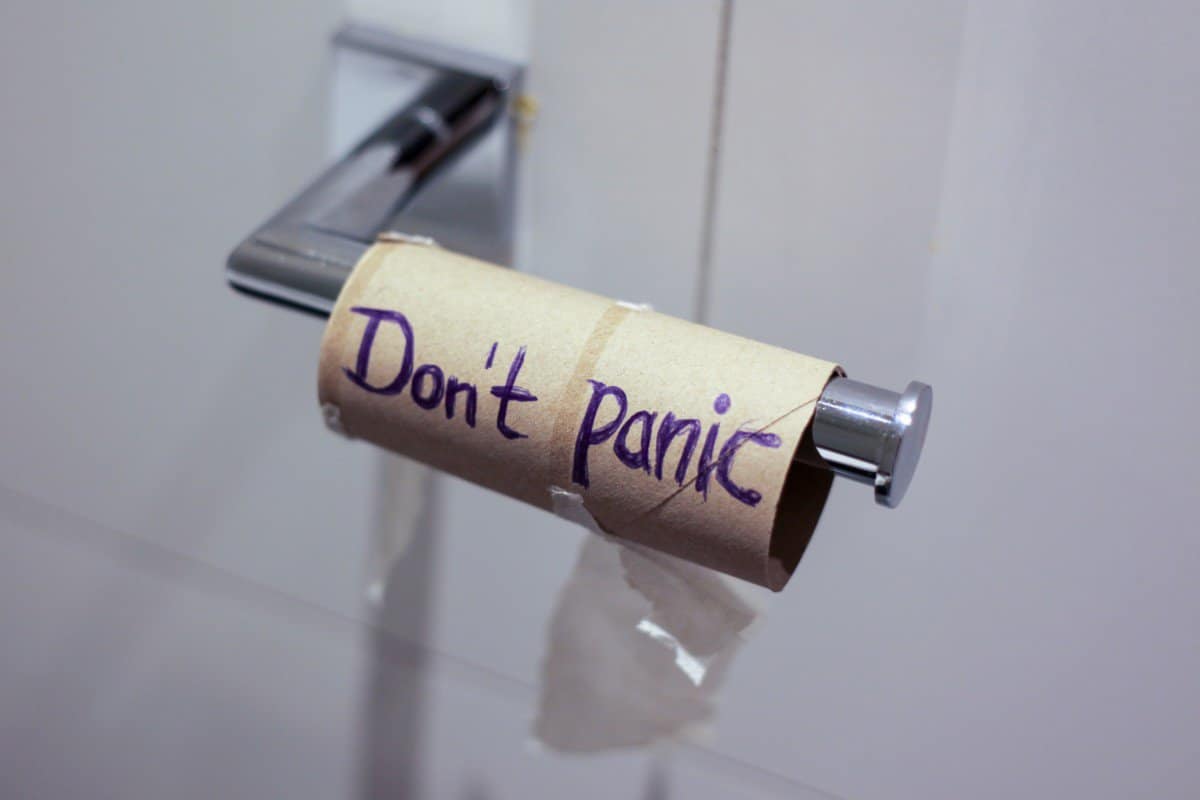
Peru is another country that fascinates me. Remember during COVID-19 when there was a run on toilet paper?
You’ve just landed in Lima, checked into your hotel, and spotted a small trash bin next to the toilet with a sign that says “No Papel.”
Your first thought is likely: why does Peru not flush toilet paper, and what happens if I accidentally do?
The sewer system in Peru usually can’t handle toilet paper, so it’s advised to bring your own and throw it away in a garbage can.
Keep reading, and I’ll share what’s up with the sewer system in Peru if it’s ok to brush with water, a few MUST-have items, and 3 cool things that I guarantee you didn’t know about the country.
🚽 The “Can I Flush?” Tool
Select your location to see the local rule.
What’s up with the Plumbing? Why Peru’s Toilets Clog Easily
After living 2 years in Cambodia and clogging up the sewer system two times, and getting lectured, I’ve come to realize that we in the U.S. are spoiled.
I know what you’re thinking: if the sewage can handle my crap, it should handle toilet paper, right? Well, in the U.S. and some other countries, there are plumbing codes to ensure the system can handle a lot of shit.
In some countries, such as Peru, the pipes could be smaller. Poop breaks up with water, but toilet paper has a harder time.
Toilet paper can also stick together, increasing the chance of blockage (that’s NOT good). Usually, there is a garbage can next to the toilets in Peru, where you are supposed to throw your poop. I know, gross, but the risk of sewer backing up leads to a real shit show (no pun intended).
This may sound strange to people in the U.S., but there are many countries where the toilets can’t handle toilet paper. This is why, in India, for example, it’s not advisable to shake someone’s left hand (that hand wipes their booty).
In some cultures (such as Indonesia) it’s disrespectful to touch someone’s head because you might have wiped your hand with your booty.
Also, of course, people don’t eat with their left hand because of the same shit (no pun intended).
Some toilets in Peru (same in other cultures) are squat toilets. You know there is no seat, but you squat down to do your business (Like a hole in the ground).
I’ve encountered these in India and Cambodia, and I’m not sure if I prefer them over the sit-down ones. There are some estimates that most of the toilets in the world are squat ones.
In Peru, it’s a VERY good idea to bring your own toilet paper “everywhere” (just in case).
Another country that is very nice is Ecuador, where I wrote a really interesting piece HERE about the mosquito situation that fascinates me (It will surprise you).
Oh, and the toilet system in Ecuador is the same; sometimes you can flush toilet paper, and sometimes there is a wastebasket next to it.
Also, it can be a good idea to bring hand sanitizer and a VERY tiny towel like this one.
They are especially useful in hostels since many of them charge for a towel. I used the smallest size recently around Europe, and it worked VERY well.
These little towels do come in handy. Apart from using the toilet, brushing your teeth is also something you should be careful of in Peru.
Can I Brush my Teeth with Water? Peru Tap Water Safety
It’s a good idea to only brush your teeth with filtered or bottled water in Peru to prevent sickness.
Being someone who lives near a beach and sees LOTS of plastic in the ocean, I try to avoid plastic water bottles.
I’m a HUGE fan of this item HERE. I used it ALL around India, Cambodia, backpacking, sometimes even in Europe, and even where I live in the U.S.
The best part is that it helps the environment, but it also saves you money. I know I’ve used mine enough times to pay for itself.
Oh, and it’s super easy to use.
You might be wondering what’s up with the water in Peru and why you can’t drink it. In the United States (we’re spoiled), we put chlorine in the drinking water.
The good news is that it kills any bacteria or viruses and is usually safer to drink. The bad news is that chlorine isn’t the best thing for you.
It’s another reason why in the U.S., I use and highly recommend this item HERE, because the chlorine in the water will dry out your skin and hair, and isn’t good.
The good news is that there is NO chlorine in the water in Peru. The bad news is that it’s not good to drink.
The reason is that there could be bacteria, such as cholera, and viruses that make you sick. Having diarrhea in a foreign country is NOT fun!
3 Things That Make Peru Unique: Culture, Food, and Rules
Now, that I got that shit out of the way, let’s talk about something more uplifting (No pun intended). I have not been to Peru, I’m just researching the crap out of it, because I’m interested in going.
When I have mentioned South America to a few people, I know the biggest concern they have is the government (It’s the same as mine).
The U.S. is a democracy, meaning the people have more control over the government than, say, Communism, where the government has complete control.
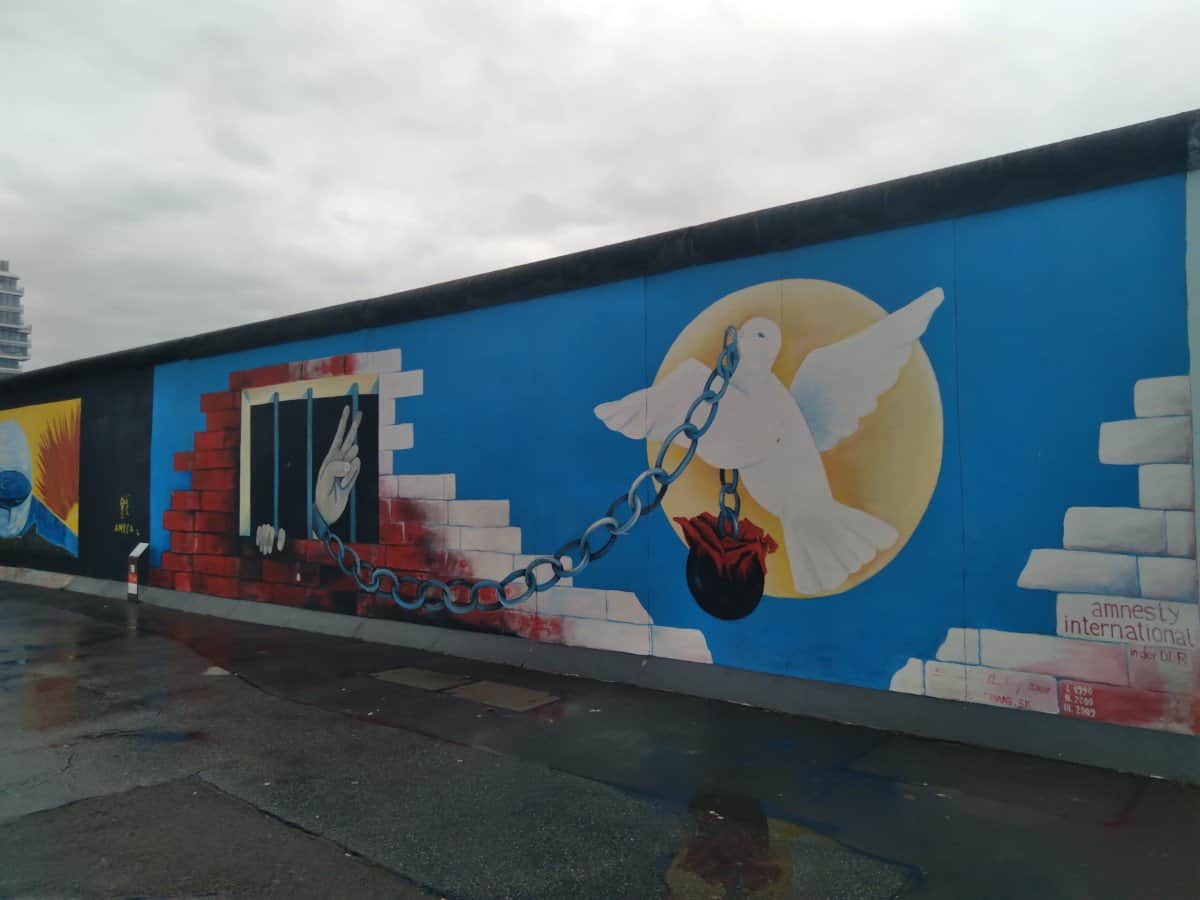
The picture above is of the Berlin Wall that I took in Germany. The good news is that Peru is a democracy. What is interesting is that the citizens in Peru are required to vote by law. The president serves a 5-year term that can only be elected twice.
In the U.S., it’s optional to vote, and so half of the people don’t bother.
The second interesting fact about Peru is the river. Recently, I read a book about why some countries are wealthier, and one of the theories is rivers. Rivers that can be used for trade, such as those in the U.S. and Europe, help the countries get wealthy.
Rivers that can’t be used for trade, such as many in Africa, mean the countries don’t trade and are not as wealthy. Basically, in Africa, it’s more difficult to put shit on a boat and move it around.
It’s estimated that the Amazon River starts in the mountains of Peru and flows to the Atlantic. What you may not know is that 10 million years ago, the Amazon probably flowed in the opposite direction.
This was when dinosaurs walked the earth, and the reason for this was due to volcanoes creating the Andes mountains and blocking the flow to the Pacific Ocean and causing it to empty into the Atlantic Ocean.
Finally, you probably know that Peru is home to Machu Picchu (the most popular tourist destination). What you may not know (I didn’t know this) is the mystery surrounding the place.
There is some controversy that the site was originally built as a sacred ceremonial site and a place to study astronomy.

Astronomy and studying the stars also helped the Inca civilization with when to plant crops. For example, the ancient design of the city of Cusco tried to mimic the stars and point to certain events in the sky (cool, right?)
If you think Astronomy is bullshit, then you might want to check out this post I created HERE, where I go over all kinds of crazy stuff about how the stars impact life on Earth (it surprised me).
Closing: Travel Etiquette and Bathroom Tips for Peru
Travel is a wonderful way to grow your soul, discover novelty, and find yourself. The most difficult and expensive part might just be the flight, but the good news is this place HERE has some hacks that can make flying MUCH more affordable.
If you are interested in getting some extra cash for a trip, you could check out affiliate marketing.
Affiliate marketing is great because it so flexible. You can do it anywhere, anytime, around your schedule, in nearly any niche, and it can be a lot of fun.
If you want to learn more, I’m giving away a bunch of free guides on the system I use HERE.
Especially in these crazy times, having another source of income can only be a good thing. I hope this post on Peru was helpful. Bye for now.