
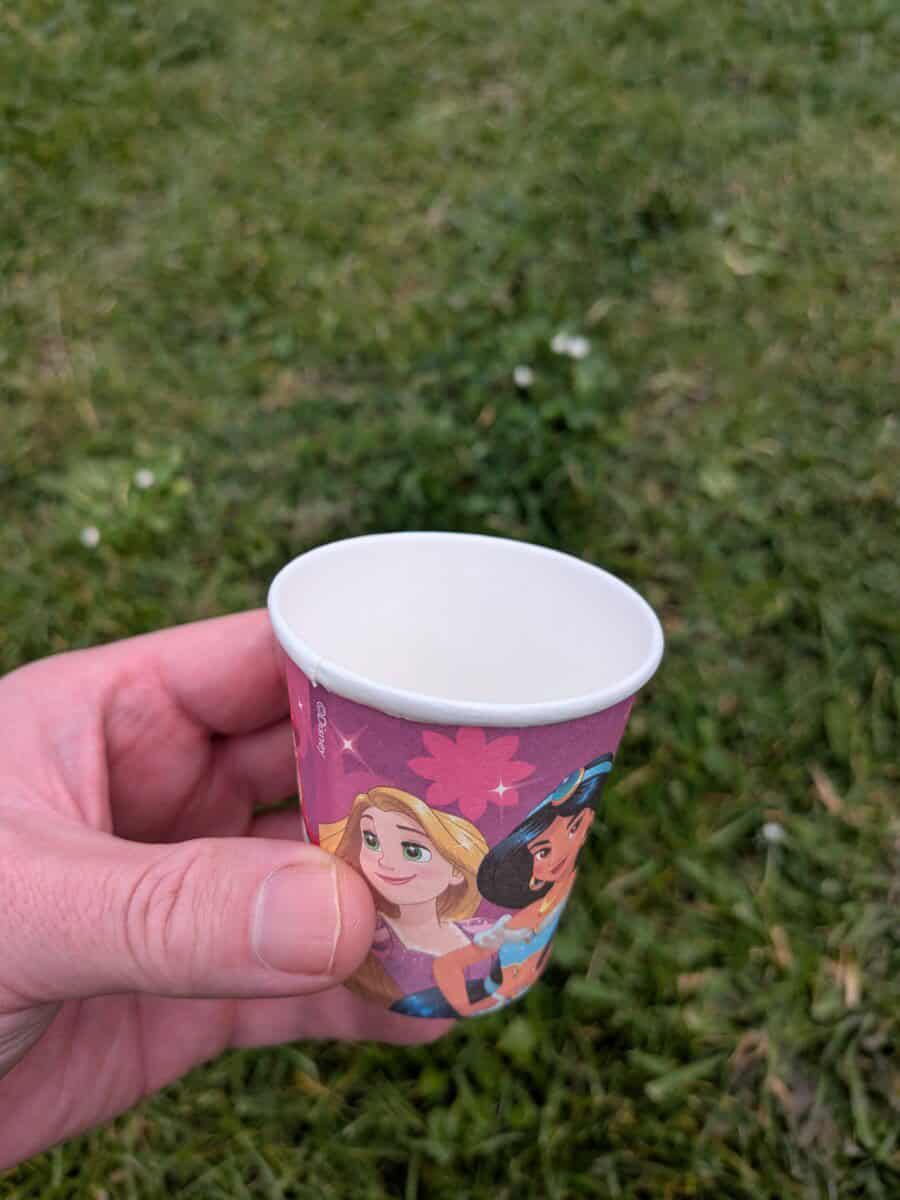
You grab your morning latte thinking you’re making the eco-friendly choice, but have you ever wondered: are paper cups lined with plastic?
Most people assume it’s just biodegradable cardboard, but the reality behind that leak-proof seal might surprise you.
If you’re trying to reduce your footprint while traveling, understanding exactly what is in your hand is the first step toward a truly zero-waste lifestyle.
Yes, paper cups are lined with plastic and not good for the environment due to microplastics.
Keep reading, and I’ll share 3 more reasons it’s bad, what to do instead, and how popular chains are changing.
Eco-Friendly Gear Maintenance Checklist
Water Purification & Hydration
Footwear & Travel Apparel
Zero-Waste Tech & Essentials
What is Polyethylene Lining? Why Your ‘Paper’ Coffee Cup is Secretly 10% Plastic
Sadly, nearly all paper cups have a small amount of plastic on the inside.
If there were no plastic lining, the hot liquid would turn the cup into mush very quickly, and the cup would not work.
Even the popular coffee places like Starbucks and Dutch Bros have a thin amount of plastic lining.
The good news is that Starbucks, in certain areas like Seattle and San Francisco, is experimenting with a compostable cup and in Europe has launched one that is plastic-free and degrades better for the environment.
More bad news is that the plastic is like ingrained with the paper, so most recycling places can’t separate them and don’t take them.
More bad news is that a single coffee cup can destroy an entire load of cardboard that was ok to be recycled.
Health Risks of Microplastics in Coffee: Does Hot Liquid Leach Plastic from Disposable Cup Linings?
The largest concern is when a hot liquid goes into the cup, the heat could cause the plastic to degrade.
A single cup of hot coffee can contain anywhere from 25,000 to millions of micron-sized plastic particles. There could also be trace amounts of heavy metals.
The health effects are still being studied, but it’s not good.
How to Order Zero-Waste Coffee: The Best Reusable Travel Mugs for Sustainable Coffee Lovers
One option, and this is what I do, is not to order coffee.
Honestly, I don’t remember the last time I purchased coffee and used a cardboard cup. I’m horrible on planes.
There is no EPA requirement for cleaning the actual coffee brewing machines. Maybe it’s best to stick to tea on a plane.
If you want to know more insider secrets and tips on saving money when flying, this is a great guide that simplifies it.
Another option is to bring your cup to a coffee shop.
Most major places allow this, and you get a $0.10 discount. There are tiny foldable coffee mugs that are easy to carry.
If you are not in a rush (yeah, hard now, right?), coffee shops have in-house cups available if you ask for your drink “for here.”
Lastly, if you MUST use a paper cup, it might be best to wait a few minutes before putting the lid on and taking a drink.
Letting the coffee cool slightly hugely reduces the amount of plastic released.
Where to Buy Truly Plastic-Free Paper Cups: Comparing Mineral-Coated and Aqueous Coffee Cups
Around 99% of disposable paper cups used in major chains use plastic to line them.
Crazy enough, a typical paper cup is 5 – 10% plastic.
There are alternatives, though they aren’t yet the industry standard due to cost and manufacturing scale:
The Standard Cup
(Click to flip)Petroleum-based lining. Almost impossible to recycle. Will last 20+ years in a landfill.
The “Green” Plastic
(Click to flip)Made from corn starch. Compostable, but only in industrial facilities. Often still ends up in landfills.
The Modern Choice
(Click to flip)Uses a water-based “paint” barrier. Can be recycled with normal paper in most curbside bins.
The Plastic-Free Holy Grail
(Click to flip)Uses minerals (like silica/clay) as a barrier. 100% plastic-free and home compostable. Hard to find!
How to Identify Plastic-Lined Coffee Cups: A Quick Guide to PLA vs. PE vs. Aqueous Coatings
If you’re at a local cafe and want to check:
Look for a “BPI” or “Compostable” logo: This usually indicates a PLA (plant-based plastic) lining.
The “Tear Test”: If you tear the rim of the cup and see a thin, stretchy, clear film, it’s plastic.
If it tears cleanly like a piece of thick cardstock, it might be one of the newer aqueous-coated varieties.
| Material | Durability | Weight | Heat Retention | Best For |
| Stainless Steel | Extreme (Lasts decades) | Medium | Highest (4–12 hours) | Rugged adventure travel & long road trips. |
| Silicone | High (Unbreakable) | Lightest | Low (1–2 hours) | Ultralight backpackers & minimalists. |
| Borosilicate Glass | Low (Fragile) | Heavy | Low (1 hour) | Digital nomads working in cafes/cities. |
The Hidden Truth About Paper Cup Recycling: Why 99% of Disposable Cups End Up in Landfills
Only a tiny number of places have the machines to separate the plastic from the paper.
Even if a place can separate the plastic from the coffee, sugar, and milk residue is another issue. It’s easier just to send it to a landfill that contaminates tons of clean cardboard.
Top 3 Sustainable Swaps to Save Money on Eco-Friendly Travel Gear in 2026
A wonderful idea is to get a collapsible coffee mug, and you can put it in your car or take it with you when traveling.
Amazon has tons of different kinds.
Plus, many places will give you a discount on coffee, and you feel good about helping the environment.
Next is to get a Steripen to filter your own water. This can save you TONS of money, and pays for itself if you use it a few times.
Plastic water bottles are expensive and are horrible for the environment.
Plus, they are not healthy with BPA poisoning, and I wrote more on the negative effects of plastic water bottles and 12 benefits of a Steripen in this post.
Another nifty idea is Beeswax Food Wraps.
You can use them as an alternative to plastic for wrapping bowls and products. They are washable, reusable, and great for the environment.
Plus, they save you money.
Closing: Are Paper Cups Lined With Plastic? 3 Things to Know
I hope this post was helpful.
I fund travel with affiliate marketing. What I like about it is you can do it anywhere, anytime, in nearly any niche, like travel or going green, and have TONS of fun.
Plus, you can earn some extra cash.
I’m giving away free, easy cheat sheets on the system I use.
I wrote a post on 11 ideas on going green and saving money for more ideas.
Have a great day.