Every traveler knows the sting of paying $4 for a plastic bottle at a tourist trap.
If you want to learn how to save money on water while traveling, you need to stop thinking like a tourist and start thinking like a local.
By making a few small gear shifts, you can save hundreds of dollars on a single trip.
Here are the top ways.
- Use a Steripen
- Hydration Bladder
- Use the “Refill” App
- Buy “Jumbos” at Supermarkets
- Check Religious Sites
Keep reading, and I’ll go over all these ways in more detail, plus a unique secret not many people know about!
💰 Water Savings Calculator
See how much you save by switching to purified water!
Is a SteriPen Worth It? How to Save $1,000+ on Bottled Water
A Steripen is one of the best investments you can make, period.
I’ve used it backpacking in the wild, traveling through India, Southeast Asia, Europe, and even to filter water in my home.
A single Steripen is rated at around 8,000 treatments.
Say 1 Steripen filters 1 bottle of water (which it can do more) and 1 water bottle is $4, then you would save $32,000.
Not including helping the environment. A Steripen is lightweight and kills 99% of viruses and only takes 90 seconds to filter water anywhere.
If you use it a few times, it more than pays for itself.
The largest benefit is that it’s so easy to use. Before the Steripen, I used a water filter where I had to squeeze hard, and it just sucked.
The Steripen is that you push a button, twirl it around some water, and in 90 seconds, you have clean water anywhere.
Plus, they are very inexpensive, and you can see if Amazon has any deals.
I even wrote a post on 12 MORE benefits of a Steripen for solo travelers, and some are surprising.
Why a 3L Hydration Bladder is the Best Budget Travel Hack for 2026
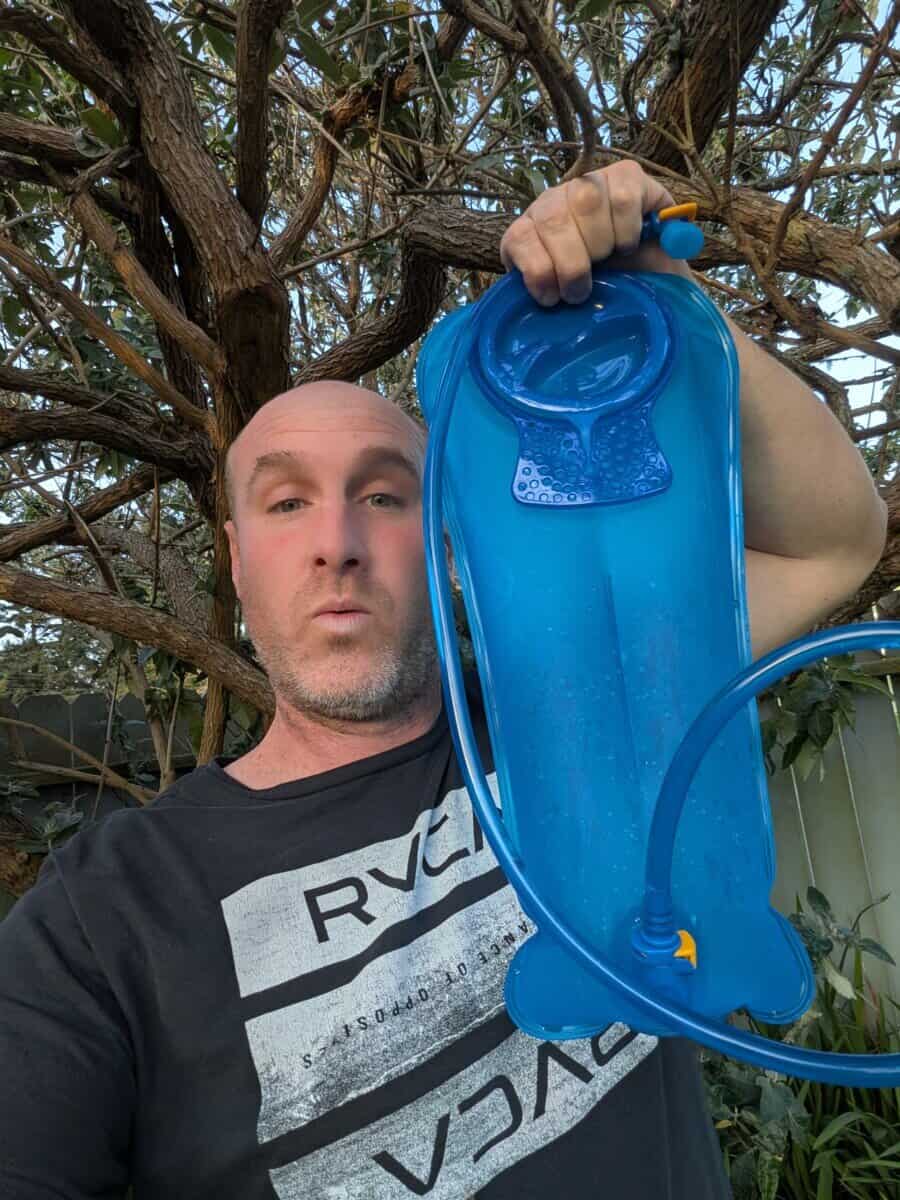
A hydration bladder is also a game-changer.
You can fill it up once, and it will last you all day. You don’t have to worry about trying to find water when you’re traveling.
It’s also nice on buses.
Most people buy expensive water bottles because they run out while they are in a touristy area, or what I call “tourist traps.”
The locals know you have money, you’re thirsty, and thus sell you water at a premium.
Also, it’s just best to carry more water than you need, especially for hot days. Dehydration is no joke.
I recently watched a video where a family of 4 used 3 liters of water on a 10-mile hike on a very hot day, and they all died due to dehydration.
Another benefit is that some modern cities and airports have hydration stations where you can fill a 3 L bladder in a second, whereas individual bottles can be a hassle (especially if there is a line).
With a bladder, I own this 3 L bladder, which is very inexpensive, and it’s hands-free. I don’t have to stop, take my backpack off, and fumble for water and unscrew it.
Easy access keeps me moving and my hands free.
Because the drinking piece is at my shoulders, I’m more likely to take small, frequent sips. This is more efficient than slugging a whole bottle when I stop.
Lastly, the bladder helps with weight distribution.
The bladder sits against your spine in the center of your day pack. Oh, and I also own this daypack, which is very nice because it folds up into the size of a sock if not being used.
If you have 2 heavy 1.5L bottles swinging on the sides of your bag, it can cause back pain because it’s not centered.
Carbon Footprint
Most bottled water is transported long distances.
By using a large bladder and UV light, you are using local water and eliminating the carbon emissions of the water bottle industry.
A bladder is made of BPA-free materials designed to last years, unlike plastic water bottles that end up in oceans or landfills.
Sadly, 10% of plastic water bottles actually get recycled.
Emergiencies
If you’re traveling, it’s not a bad idea to have travel insurance.
It can cover Medical Emergencies like doctor visits and hospital stays that can cost tens of thousands of dollars out-of-pocket
Insurance covers emergency evacuation.
Insurance often covers lost or stolen gear. I used to live in a Southeast Asian country, and I had TONS of stuff stolen from me.
Insurance can also reimburse you for hotels, flights, and tours that are booked. With travel things just change, right?
The insurance I recommend is the most budget-friendly, it has no age limit, it’s valid in any country in the world, and get insurance in under 60 seconds.
Plus covers COVID-19 treatment and quarantine costs.
You can view this insurance and see if they still have a discount.
How to Find Free Water Refill Stations Globally with the Refill App
It’s an app with 330,000 refill places worldwide.
These are places where you can refill your 3L bladder of water.
The app has also expanded to package free lunch spots and zero-waste shops for toilet items.
Many coffee shops listed on the app offer a discount if you bring your own reusable cup.
The negatives with the app is even if it says global network, it’s mostly in the UK and Europe.
- For Japan, the main app is mymizu
- U.S. and Canada, the Tap app is the ideal choice.
Also, since the apps rely on user-generated data, sometimes they are wrong.
Like most free apps, it collects usage data and location info to function.
Stop Buying 500ml Bottles: How to Use 5L ‘Jumbos’ to Cut Water Costs
If you didn’t bring a Large Bladder, another idea is to buy a Jumbo at a supermarket.
While not as good as a bladder, they hold lots of water.
In many places, a tiny bottle could cost $1.50, and a supermarket 5L jug could cost $2.00. For an extra 50 cents, you get 10 times the water.
Of course, finding one you want to carry is another problem.
You could get 1 with clean water and store it at your hostel or hotel. Then have a smaller jug you can carry around and just refill it at your hostel.
The main way to save money while traveling is on flights.
If you shop around everywhere you look, prices are different.
What is crazy is that airlines and booking places change prices based on your search history.
What if there were a way to save hundreds of dollars on a flight? Someone created a guide that shares insider secrets on booking them.
This is where you know exactly what to do to get the cheapest flights available every time.
Even if you save just a tiny amount of money on flights, it all adds up and is worth it.
Where to Find Safe, Free Drinking Water at Temples and Religious Sites
This is a unique strategy.
I remember a long time ago going to a Thai monastery and getting free water.
I think I was in India, believe it or not.
There is this concept called SEVA (selfless service). Temples have good water for pilgrims and visitors.
They are usually free of charge and usually have a high degree of cleanliness.
Religious sites are often located in the heart of historic districts, where tourist spots might charge a lot of money for a single bottle of water.
I will say my favorite part of India was was Buddhusm was created “The Bodhi Tree,” because it was so quiet. I remember India having noise pollution along with normal pollution.
Wearing some good earplugs like these is so valuable, especially in Hostels where some people snore. Getting good sleep is SUPER important!
I think they are very valuable for your sanity, too.
Closing: How to save money on water while traveling
I hope this post might have been helpful.
I fund my travels through affiliate marketing online. What is great about it is that you can do it anytime around a busy schedule, anywhere in the world, in nearly any niche like travel, plus it can be a lot of fun.
I’m giving away a short cheat sheet on the system I use for FREE.
Have a great day.