

This post was originally published in [2021] and has been fully updated for 2026 with new data and tools.
Google recently updated its Chrome Store policies for a reason: the Honey extension affiliate link controversy.
What started as a viral thing has turned into a massive industry shift, forcing extensions to be more transparent about how they monetize user data.
While Honey claims they are simply following ‘last-click’ standards, the reality for creators is a significant loss in cash.
We’ve developed a free tool to help you fight back and ensure your hard-earned commissions actually land in your bank account
The Honey app was taking affiliate commissions from the creators who were promoting it.
Keep reading, and I’ll share the controversy, what happened, and how Honey can provide discounts. I’ll share the risks of using Honey and the benefits. Plus, I’ll share additional hacks for saving money when shopping online.
🛡️ Affiliate Link Integrity Scanner
Paste your affiliate link below to see if browser extensions can easily detect and overwrite your ID.
*This tool checks for “naked” affiliate parameters that extensions like Honey look for at checkout.*
What happened with the Honey Link controversy?
I actually tried to get into the Honey affiliate program, but was denied.
Lucky me.
Even though I already knew Honey did some sketchy stuff.
What happened is that there is controversy around last-click. In affiliate marketing, the last person to touch a customer’s browser before the sale gets 100% of the commission.
This YouTuber Megalag demonstrated that even if a user clicked someone’s affiliate link, Honey would swoop in at the end and get 100% of the cash.
Sucks right?
If more SHADY is Honey could overwrite the creator’s affiliate cookie with its own.
Honey would claim the entire commission while giving the user a few cents of “honey gold” or find no working coupon.
Honey was stealing revenue from the very creators like MrBeast, Linus Tech Tips, and big-name influencers that actively promoted honey.
That sneaky honey badger!
Sure, influencers lost money, but it got worse.
Brands stopped making deals with the influencers because it looked like their conversation numbers were bad.
The good news is that Honey lost over 8 million users on the web store by the end of 2025.
Also, many affiliate networks have delisted the Honey app due to this.
But it doesn’t end there. There was a class action lawsuit filed by big-name creators. Sadly, the suit was dismissed, but Google updated its web store policies to stop extensions from updating a shopping related cookies without the user’s knowledge.
The cookie is how affiliate marketers get paid.
The Honey Business Model: How “Free” Coupons Generate Billions
The app Honey was created out of frustration. A cash-strapped dad was looking for a coupon to buy pizza when he realized an app would be a great idea.
This app could provide coupons anytime he needed them. Next, Honey was born in October 2012.
For the next 2 and a half years, the app could not make money. The app creators Ruon and Ryan realized the Honey app was just as valuable to retailers as it was to consumers.
According to app creators…
“The app takes a consumer who wants to check out and gives that person the confidence to do it.”
Without Honey, some shoppers see a coupon code box and think there is probably a coupon code out there somewhere. Then the shopper opens up Google and searches for the Coupon code. Have you ever done this?
I do this all the time.
The app Honey does is all the work for you. This way, you know you’re saving money and are more likely to purchase.
Honey acts like the broker connecting the consumer to the merchant. It’s just like a real estate agent that connects a buyer to a home seller.
Yes, they do get a commission every time someone makes a purchase using their app. This is why PayPal purchased the app Honey for $4 billion in early 2020.
Why did PayPal buy Honey?
It’s because Honey makes lots of money. Honey might just be the #1 affiliate marketer.
In 2018, Honey made around $100 million while growing at a rate of 100 percent, according to PayPal CEO Dan Schulman.
Now you know how Honey makes money, you might be wondering how it saves people money. One of the ways it can save you money is with its Honey Gold program.
Every time a user purchases a product using the app, the user gets Honey gold.
Once the user has collected 1,000 Honey Gold, the user can get a $10 gift card to Amazon. How does Honey pay for the $10 gift card to Amazon?
It uses some of the money it made with its affiliate commissions. Next, how does Honey find the coupons? I don’t know how it finds coupons, and I’m sure Honey is not going to tell anyone.
Sadly, Honey does not have a monopoly on coupons. Honey can help, but it doesn’t hurt to look for coupons on Google when making a purchase.
Also, sometimes the app crashes, and the coupons have already expired.
More bad news is that the app does slow down your browsing experience. You can see how much by checking out this link at WindowsReport.com.
Cookie Hijacking Explained: Why Honey Might Be Overwriting Your Favorite Creator’s Links
The biggest problem with using the app Honey is how the founders discovered it helped merchants.
Just like what the app creators said in their own words, “The app takes a consumer who wants to check out and gives that person the confidence to do it.”
If someone is on the fence about making a purchase and the Honey app says it found a way to save you a few dollars, it’s going to help you make the purchase.
In the long run, I’m not confident that Honey will save someone money, but the decision is yours to make.
I could be wrong, but perhaps Honey may end up costing you more money.
It’s very similar to using a credit card to get reward points. Sure, you think you are saving money with points, but you might not be.
The reason is that it’s psychological. You’re more likely to spend more money on things you don’t need just to get the points.
They even have a mascot that throws confetti when you’re about to make a purchase.
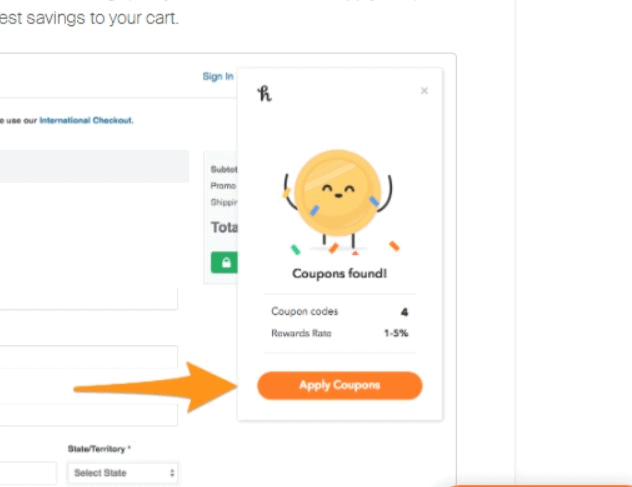
There are other warning signs with this app. Here are a few of the messages that come up when you download the app.
- It can read and change your cookies.
- Store personal browsing data on your device.
- See the websites you visit.
- Read and change anything you send or receive from websites.
- Read and change content on the websites you visit.
It does sound a little scary, right?
The reason it can read and change your cookies is to get the affiliate commissions when you make a purchase.
Another warning with this app has to do with Amazon.com. Amazon does not like the app Honey, and if you use the app, then this warning will pop up.
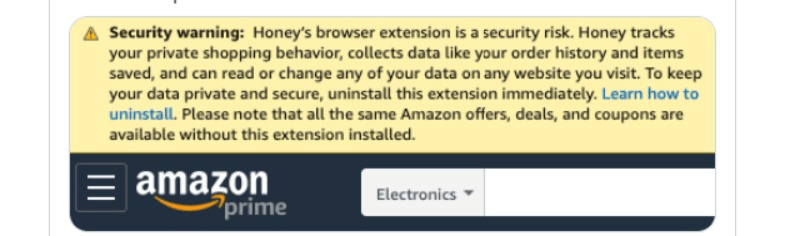
Lastly, if you have an ad blocker installed on your browser, then it could prevent the app Honey from working.
You can disable your ad blocker and reload the page to get the app Honey to work.
Is Honey Still Safe to Use? Weighing Privacy Risks Against Coupon Savings
The app Honey has red flags, but there are some benefits to using it.
Price History – One of the features that could be helpful is the price history. This tool allows you to view an item’s price history.
Maybe, if an item had a lower price in the past than in the future, the price will drop again.
This is one of those features I would probably never use, but it’s a feature that I wanted to share with you.
DropList – Another benefit to using Honey is the Droplist. You can add a product to this list, and Honey will watch the item.
The item will be watched for 30 days to 120 days. If the price drops, then Honey will send you a notification that the price has been lowered. This feature is only available to members in the U.S.
Honey Gold – Yes, you can get a $10 dollar Amazon gift card if you have collected 1,000 Honey Gold. The gold can expire if you have not collected at least 10 gold in a 12-month period.
Still, a $10 gift card is nice, right?
Beyond Honey: The Best Open-Source Extensions for Ethical Couponing
Using coupons isn’t the only way to save money when shopping online. For fun, I want to share some unique ways to put money in your pocket.
Hopefully, you don’t know about these hacks.
Comparison Shopping – The only way to know if you’re getting a good deal is to see what others are selling the item for.

Still, it can be time-consuming to view other merchants. What if there were a way to save time doing this? There is, and it’s called Priceblink.
What I like about PriceBlink is that when you’re shopping for an item, it automatically shows you the prices that other merchants are selling the item for.
Cool right?
Another benefit of using Priceblink is that it does help you find coupons that can save you money. You can check out Priceblink by clicking on the link HERE.
Price Drops – You can save money after you purchase a product online. I bet you didn’t think about this, right?
When you make a purchase, and the merchant drops the price of the item, you can save money. Most merchants have a policy where they will give you the difference if you catch this.
The trick is you have to catch this. How do you do this?
The problem is that you are very busy, right? Well, an app does this for you. Yes, it monitors the price and can notify you if you can get a discount.
Even better, it can contact the merchant on your behalf just like a virtual assistant.
Cool right? This can also work with shipping. Say, you were guaranteed 2-day shipping, but the shipping took 3 days.
This app can contact the retailer on your behalf to save you money.
Lastly, the app can track when you purchased items and check them against the retailer’s return policy. Then, when the deadline approaches it can notify you, so you don’t miss it.
The catch is that you have to allow the app to scan your emails. For some people, this is a deal-breaker, and some people don’t care.
According to the company, it only looks at emails related to purchases. The app is also free to use, and I like the novel idea of it.
You can learn more about this app by clicking HERE.
Leave Items in the Shopping Cart – Yes, this is an interesting idea for saving money. Instead of making a purchase right away, keep the item in the shopping cart and wait.
This can save you money from making an impulsive buy on an item you don’t need.
Closing: Honey extension affiliate link controversy!
Also, if have an account with the retailer sometimes the merchant will try to close the deal. This means coupons, price reductions, or other goodies to get you to buy.
Not a bad idea, right?
Another way to save money that I really enjoy is to flip some items around your home that you don’t use.
This puts money in your pocket quickly and declutters your home. 2 amazing benefits. I share all kinds of tips on how to do this and scams to look out for in this post HERE.
I hope this post on how Honey makes money was helpful to you. Bye for now.