

This post was originally published in [2023] and has been fully updated for 2026 with new data and tools.
Most SEO experts want you to believe that ranking on Google requires expensive software and a degree in data science.
They make it sound like rocket science, so they can charge you thousands.
But the truth is, learning how to find high-value keywords for traffic can actually be a very simple—dare I say, lazy—process.
You don’t need a massive budget to find the ‘gold mine’ terms your competitors are missing. In this guide, I’ll show you the shortcuts I use to get traffic fast, including a free tool you can use right now.”
The lazy way to find high-value keywords is to use a tool to get ideas and then check them using Google itself!
Keep reading, and I’ll share my exact process to find good keywords when it comes to blogging and YouTube.
Long-Tail Keyword Generator
Enter your seed keyword to find 100 low-competition opportunities with estimated traffic.
I'll share how to know how competitive a keyword is and how much traffic it gets. I'll also share why "many" keyword tools are usually not worth the money and why I don't focus on link building.
What are High-Value Keywords and Why Do They Drive Free Traffic?
High-Value Keywords are very valuable because they don't have a lot of competition and get good traffic. Most things in life come down to supply and demand, and keywords are no different.
It's very similar to a guy going to a nightclub full of the hottest women and having NO guys as competition (talk about a gold mine).
Finding these keywords is great because you can get lots of traffic (visitors) and they can be easy to rank. Even better is that you can get traffic for free, and you can still get traffic months or years into the future.
Of course, traffic is one thing, and turning that traffic into cash is a whole other topic.
How to Find Low-Competition Keywords for Blogging (Step-by-Step Guide)
Finding good keywords for blogging really is half of the battle.
The next step after that is finding a way to make money (which might be more important).
What's the point of getting lots of traffic if you can't get paid for it right?
You could find an affiliate product you like, lead generation, or the best way is with a landing page. What makes a landing page SO powerful is that you own the traffic.
Oh, and more such as....
- Can promote multiple offers
- Can contact someone WAY in the future
- Promote your other content
- Do list swaps
- Easier to get accepted into affiliate programs
- MUCH higher conversion rate
- Great for launching products
- Get valuable feedback
- Protects you from algorithmic changes
- More personalized marketing
Plus, why not? The tools are free or almost free. In fact, I'm giving away a whole system on how to earn money using email and a landing page, and you can check it out for FREE HERE.
Sorry, got ahead of myself.
Blog & Email Revenue Estimator
1. Traffic & Content
2. Monetization Rates
3. Email List Power
*Calculated based on $0.10 per email/subscriber monthly activity average.
The first step is choosing a niche, and I wrote a post that shares how to do this HERE.
Now that you have the niche, it's good to brainstorm common questions about it. What are some common questions someone would have about the niche?
You could do this manually, or if you're lazy, a tool can be helpful. I'm not a fan of keyword tools because many are WAY too expensive and don't give you accurate data.
Still, if there was one I would recommend it would be this one HERE. The reason I like it is due to NO ongoing costs, unlimited searches, and its sole purpose is to give you ideas. It also focuses on both blogging and YouTube, and I like that.
Another thing I like is that if you put in a keyword, it will generate TONS of questions that you can target. The important thing is that it can save you time.
When you have an idea, you want to open up a new web browser that you don't normally use and type it in the search. Now, "really" look at the top 5-10 results that show up.
- How is the competition?
- Are there many articles not on point?
- Are there lots of forums?
- Are the websites not established?
- Are there articles that are very weak, and don't answer the question?
- Can you write a "better" resource?
If the answer is yes, then you might have a winner. Plus, you can still get good traffic if you write a better, attention-grabbing headline, and that is worth thinking about. Next, you just want to make sure that the article you are writing has "some" searches.
How much search volume a keyword gets is a tricky question, because the only one that "truly" knows is Google.
If it's similar to a question in a "people also ask segment, then it's probably going to have some searches.
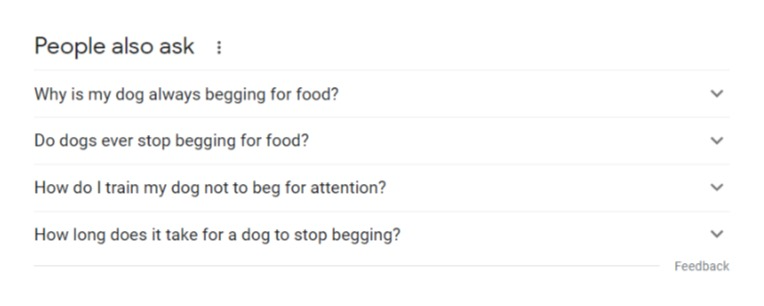
Another idea is if you start to type it into Google and the search engine automatically fills in the rest, then this is a good indicator.
A third idea would be to type the keyword in Google Trends and see if any information comes up, and the more the better. These are all indicators that the phrase has "some" popularity.
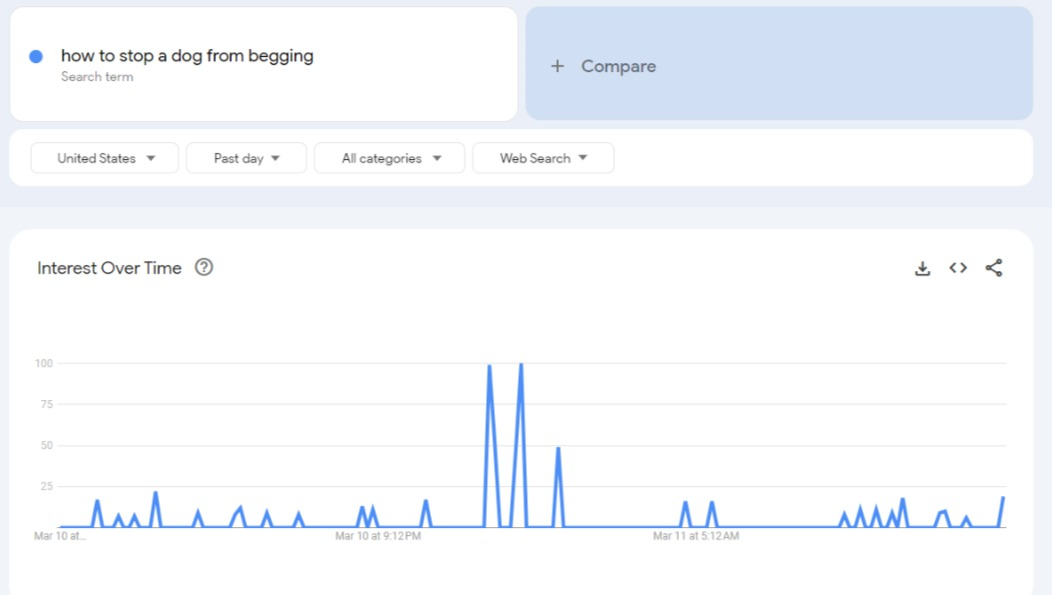
In the end, "some" common sense is needed, and if you think enough people will type in the question or keyword into Google, then your "common sense" should override whatever keyword tool you're using.
Usually, it's just better to write the article if your hunch feels it could be a winner.
Oh, and if you want more details and options on how to find keywords for blogging, you can check out this post HERE.
How to Find Viral YouTube Keywords for Search and Suggested Traffic
Video View Accelerator
Generate 100 low-difficulty, high-traffic video keywords instantly.
YouTube is a completely different beast from blogging, and you get traffic from MANY other places other than search. I wrote a post HERE that shares all the different ways you can get views from YouTube.
YouTube feeds someone a video based on what it thinks they will like. This is why having people stay until the end of your video, leave comments, and subscribe can help.
The ONLY thing Youtube cares about is keeping people on Youtube.
Still, search is a "way" to have people find your video, and I do know of a few tricks that can help you.
The first type is to win in "Google Search." If you have done a search in Google and a video shows up as a snippet (top video), or as a video bar, then your video can also show up in the search.
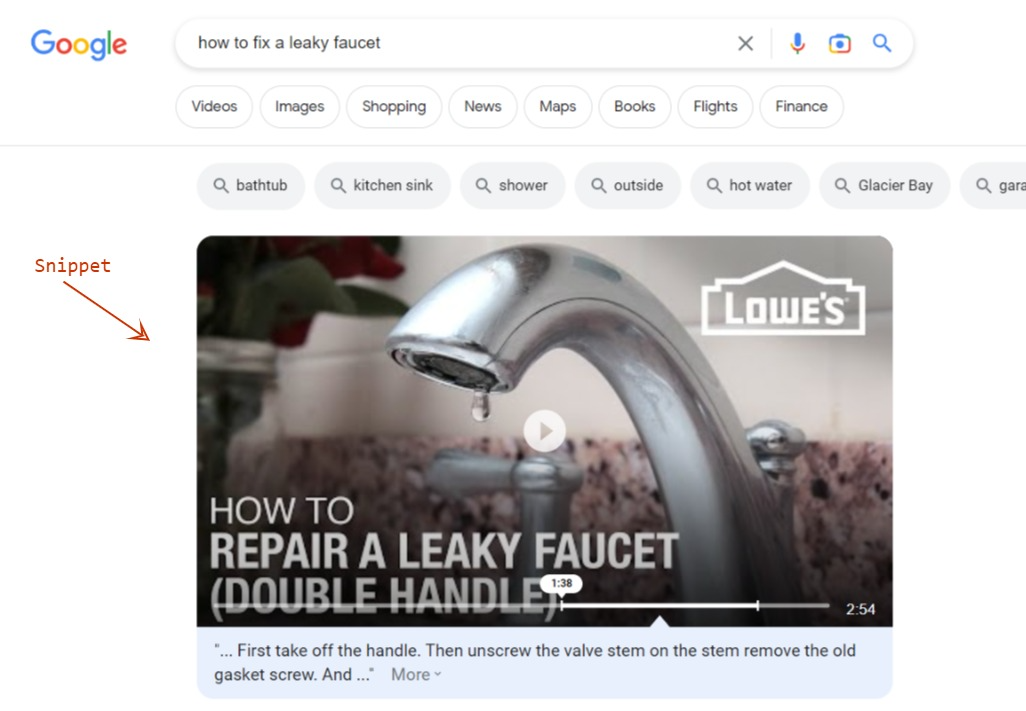
Even if there are NO videos on a search topic in Google, you can still win in the YouTube search engine.
You can use Google Trends to see how popular a keyword is, as well as the other 2 methods I talked about earlier. YouTube is great because it can also recommend your videos to other people who didn't search for them.
The videos I create take (a very short time), plus my thumbnail takes (NO time), and I use free tools that I talk about in this post HERE.
If you want to get "super" geeky (I should do this, but I don't), you can create a really good video on a topic and then have similar videos all direct traffic to that video.
You could imagine that this would be like a wheel that points to a hubcap, and then that hubcap either points to a landing page, blog, or affiliate offers.
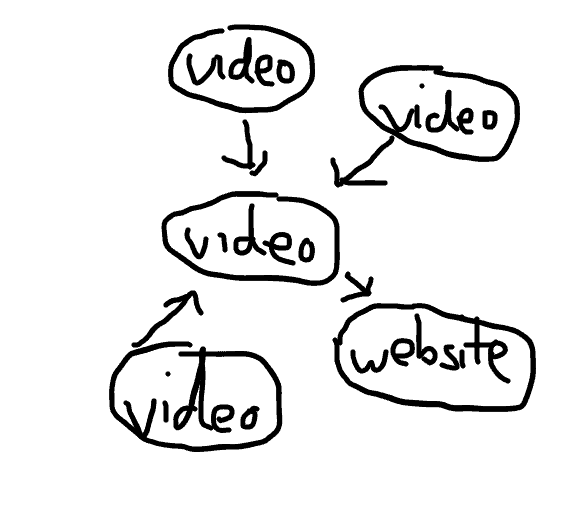
What's so cool about this is that it shows the YouTube algorithm that your "main" video is valuable, which helps it rank.
Plus, it really helps the algorithm, since YouTube wants people to stay on YouTube.
Are Paid Keyword Tools Worth It or a Waste of Money for Beginners?
Many keyword tools are similar to driving a Porsche when you could get by with a Honda. The main problem is they are just NOT accurate.
The ONLY source that truly knows the search volume and how competitive a keyword is would be Google. All the numbers that ANY keyword tool will give you, I'm just VERY skeptical of.
Even if the keyword tool is right when it comes to the search volume, it also doesn't take into account similar keywords that "also" rank for the term.
The total traffic that you can get for a term is probably going to be different than what ANY keyword tool will give you.
One area where keyword tools can be helpful is coming up with ideas and brainstorming. When it comes to these tools, there is ONLY 1 that I would recommend, and that is this one HERE.
The reason I like it is not only that there are no ongoing fees, but its sole purpose has to do with giving you TONS of ideas. When you get those ideas, you still want to DYOR (do your own research) on competition and traffic.
The good news is that if other people use these tools and believe that a search term will get 0 traffic, then they will not write it, and there will be less competition for you and me.

Do You Need Backlinks to Rank or is High-Quality Content Enough?
It's better to focus your energy on creating as helpful content as you can instead of trying to trick Google with backlinks, which can backfire!
Over 15 years ago, I was VERY heavy into link building, and I had a TON of success. I used all kinds of black hat techniques, where I could rank anything.
Yeah, I know I'm an old guy!
The challenge is that Google has gotten smart (very smart), so trying to spam backlinks to get rankings is not worth it in the long run. Plus, it can backfire as it did for me and hurt you.
The same amount of time you spend begging someone to give you a backlink, you could have invested in creating good content, and that is a better investment of your time.
Even better if you put stats up or original research, you could get natural backlinks, and that will improve MANY other factors that all impact how competitive your post will be.
Conclusion: Building a Sustainable Traffic Strategy the Lazy Way
Blogging and YouTube are amazing places to get free traffic, but they are not the ONLY places. TikTok, Instagram, Medium, Quora, and Anchor.FM, LinkedIn, Twitter, and Substack can all be great places as well (plus TONS more).
What I like about blogging and YouTube is that it's a jumping-off platform for other places. You can repurpose your blog or video to other sites and get even more traffic.
Plus, the content you create can continue to earn you money years into the future, and you can actually sell the blog or channel if you want.
Oh, and with free traffic, it's very easy to put yourself in profit when your overhead is almost nothing. Paid traffic is more advanced because if you make a mistake, it can cost you "a lot" of money.
I really just scratched the surface of what is possible if you want to learn more. Substack is an area that is REALLY cool.
It does everything using email and is FREE.
I wrote a post that talks more about it HERE. It also works great with blogging since you can repurpose your blog post on Substack. Heck, you can do it with Medium, LinkedIn, and even YouTube, too.
I hope this post on how to find high-value keywords was "a little" helpful and gave you some ideas. Bye for now.