
This post was originally published in [2021] and has been fully updated for 2026 with new data and tools.
Many former users are still asking, “What happened to the BlockFi Kroll data breach?” as phishing emails continue to surface in 2026.
The incident, which originated from a targeted SIM swap attack on a Kroll employee, exposed non-sensitive claimant data like names and email addresses.
While passwords and funds remained secure, the fallout remains a major security headache.
🚨 BlockFi Data Breach Auditor
Check your phishing risk level based on the Kroll incident.
The 2023 Kroll Hack Explained: How a SIM Swap Exposed BlockFi Claimants
What happened is that an agent suffered a SIM swap attack that leaked the data of Blockfi, FTX, and Genesis claimants.
What leaked were names, email addresses, and claim amounts.
So, this created a massive headache where Blockfi users are getting hit with phishing emails. Phishing emails is when someone sends you an email with a fake “click here to claim your funds” so they can get information.
It’s a large headache
BAsically be extra careful. I know I put lots of money into Blockfi, and I had a family put lots of money into the back.
My family got all the money back, and I got, I think, 50%.
The Rise and Fall of BlockFi: Where the Bankruptcy Estate Stands Today
I invested very heavily into Blockfi, and as of February 2026, it’s a liquidating Estate.
Blockfi emerged from bankrupcy in 2023, due to their massive 875 million settlement with FTX and Alameda Research.
Small claims under $1,500 were mostly paid out at around 50% of their value. Loan customers have received some, but are still waiting for final payments.
Kroll is in charge of the distribution of funds.
If you had money in Blockfi, you could go to Krolls website to make a claim.
Behind the Scenes: How BlockFi Managed $10 Billion in Assets Before the Crash

You can see this with Bank of America when an employee sold data of its customers.
On May 14, there was a hack attempt with Blockfi.
No funds or sensitive information were stolen. The hacker did a sim swap on an employee’s phone. This means they took control of someone’s phone in a nutshell.
Call me crazy, but I think that a failed hacker attempt on Blockfi was a good thing. Now the company is scared, more paranoid, and has tougher security.
Still, security is a battle, and it starts at the top with the chief security officer.
Adam Healy is a 15-year veteran of the technology industry with experience spanning national security, healthcare, and financial services.
Next, every person who gets hired undergoes background checks and has their references. Every person who gets hired completes cybersecurity training.
This training continues after someone has been hired, and from what I understand, they reduce their risk of getting hacked as much as possible.
Still, anything is possible.
After studying Blockfi’s security and anti-hacking methods, I trust my money with Blockfi over any Crypto exchange or even my bank’s security.
Still, the main thing you have to worry about with security for your crypto is yourself. I know I’ve had a girlfriend steal money from me.
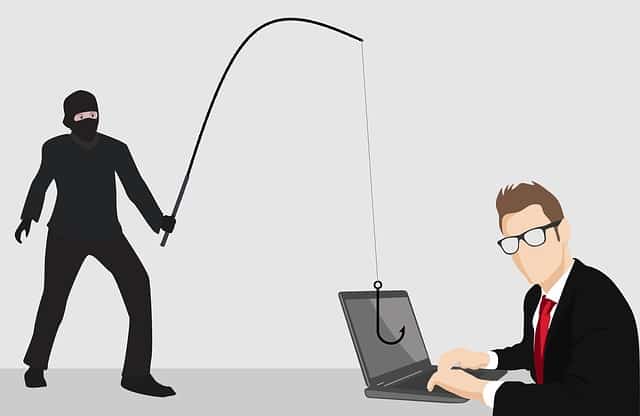
Blockfi does have industry 2-factor authentication.
This means you need 2 sources to verify your identity. Maybe a password and your phone are an example of this.
They also have whitelisting. This means when you withdraw money to an address, it MUST be whitelisted by you.
Another risk that you have with Cryptocurrency is the people you know. Yeah, don’t brag to people that you have cryptocurrency or flash your wealth; it’s not a bad piece of advice.
How Did BlockFi Pay High APY? Rehypothecation and Lending Risks Revealed
What Blockfi does is take your cryptocurrency or stablecoins and loans that money to institutions and charges them interest on it.
The interesting thing with cryptocurrency is that there is NO clearing cycle.
The clearing cycle means it takes time for money to move from one area to another. The markets are running 24 hours a day, 7 days a week.
All these exchanges, such as Coinbase, Kraken, and Binance, are not connected, and they earn money through arbitrage. They buy things low and sell them high and do it instantaneously. The problem is they need to have the crypto right there to do it.
Blockfi comes and gives them the crypto they need and charges them for it. They do the same for Hedge funds that make money with arbitrage.
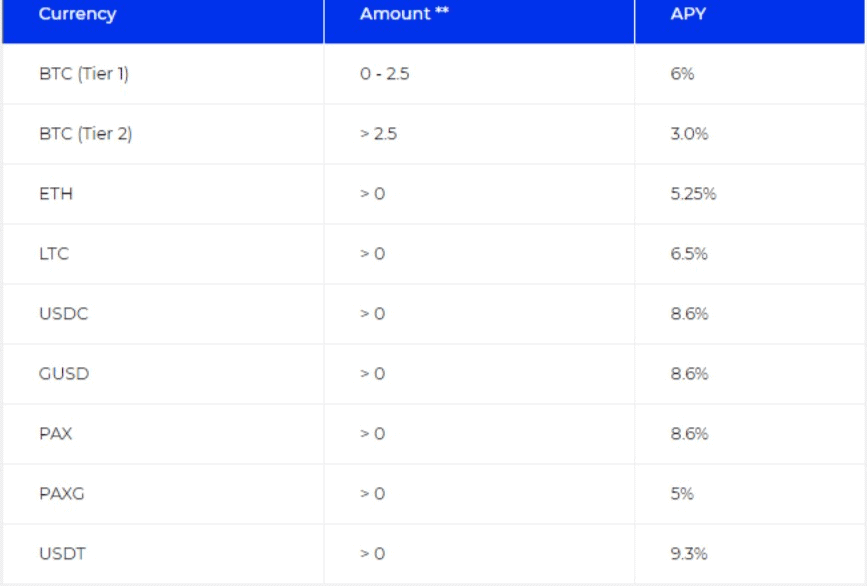
The question you probably have is, how can Blockfi pay 8.6% with stablecoins that are dollars? How can Blockfi do this, and other banks can’t? Some people feel this is too good to be true.

It’s difficult for crypto companies to have a relationship with a U.S. Bank. Major banks don’t want to mess with crypto exchanges because of the volatility.
This comes down to supply and demand, and Blockfi charges these crypto institutions a higher rate due to this.
In time, major banks will probably deal with crypto institutions, and when that happens, Blockfi will have to reduce the interest rate they pay to loan out money.
Counterparty Risk vs. Self-Custody: The Hard Lessons from the BlockFi Bankruptcy
The main issue to have with putting your money into Blockfi is that it’s not FDIC insured. FDIC insured means if the bank goes belly up, the federal government will give you your money.
FDIC insurance came about during “The Depression” when there was a run at the bank, and everyone wanted their money at the same time.
This led to banks failing, and the U.S. Government had to ensure them to help with confidence. FDIC insurance just helps with confidence.
The truth is, if you’re going to get a higher interest rate on your money, you’re going to have more of a risk. All you can do is reduce your risk as much as you can, and this is what Blockfi does.
Here is a good video that explains how BlockFi reduces its risk.
How Blockfi reduces counterparty risk (basically, someone runs off without paying) is the same thing you would do if you loaned money out. You would get some type of collateral in exchange.
This reduces your risk “a lot.”
Another concern that some people have is how Blockfi performs if the Bitcoin market rises very high or drops very far?
The answer to that is confidence.
You’re seeing large institutions such a Twitter, Grayscale, and Tesla holding on to Bitcoin, and this helps set the floor price.
Another thing is the history of digital currency. Bitcoin does drop, but then it comes right back.
Also, the market cap of Bitcoin is still very small.
This is one of the reasons I invested in Bitcoin because I wasn’t sure if it was a bubble or not. The market cap of Bitcoin is tiny compared to that of gold and large companies such as Apple.
This means “nobody” is STILL not invested in Bitcoin.
Still, nobody knows what is going to happen to Bitcoin and other cryptocurrencies. This makes the game exciting, but it is risky.
As an investor, if you’re going to invest in Bitcoin or other cryptocurrencies, just be mentally prepared to ride out the ups and downs.
Crypto Due Diligence Checklist 2026: How to Audit a Platform Before You Deposit
Also, don’t invest any amount of money into Blockfi that you can’t afford to lose. For your financial well-being, Dave Ramsey is spot on with his baby steps.
The first step is to save up $1,000 dollars for an emergency. Next, get out of debt. Debt sucks away at your money and your goals. Third, save up 3-6 months of living expenses.
The world is crazy, so having some money saved up for an emergency is a great idea.
What if the stock market or crypto market crashes tomorrow? Having some money saved is a good thing and gives you peace of mind.
Step 4 is to invest 15% of your income. Cryptocurrency can be a part of your investing plan. The main reason to invest in cryptocurrency is that the U.S. Government is printing TONS of money.
It’s a hedge against inflation. Inflation means your money is worth less because there is more of it out there. How far Bitcoin will climb is anyone’s guess.
In the end, it’s your own money. You have to do your own research and go with your gut instinct on whether it’s a good buy or not.
Since, writing this post, I put a TON of my money into Blockfi, as well as a TON of money from a very close family member.
Blockfi has since gone out of business due to FTX, the exchange. I’m not exactly sure what happened!
Luckily, being patient, I got all my money back and, most importantly, all of my family members’ money back!
Losing my money was bad, but losing someone else’s money was the worst!
Closing: What happened to Blockfi Kroll data Breach
The lesson really is to diversify. Even with the safest bets (I thought Blockfi was safe), there is risk.
I’ve always been a large fan of affiliate marketing. You can do it anywhere in the world, any time, around your schedule, in nearly any niche, with very low startup cost, and have TONS of fun.
I’ve been at it for 15 years, and I share the system I’m most excited about in this post HERE.
I hope this blog post on Can Blockfi be hacked was helpful to you. Have a nice day.