This post was originally published in [2025] and has been fully updated for 2026 with new data and tools.
In a world where everyone is shouting for attention, being the loudest person in the room is no longer enough.
To build a sustainable business in 2026, you need to be the most trusted person.
Mastering the art of becoming a go-to person in your niche means that instead of chasing clients, the opportunities start chasing you.
Here are 10 ways.
- Admit you’re not an expert
- Keep showing up
- Best friend voice
- Share your “L’s” (losses) as much as your “W’s”
- Teach the “Why,” Not Just the “How”
- The “Ultra-Niche” Pivot
- Share Systems
- Share Results
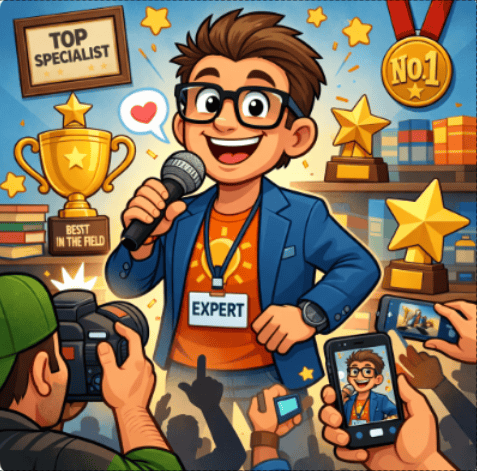
- Hold the microphone
- Document the process
Keep reading, and I’ll share what stops most people from being successful in affiliate marketing and how you can overcome this.
What stops people from being successful in affiliate marketing
Some people feel they need to know everything on a topic before they even start.
This leads to overthinking and getting nothing done.
There was a popular book and even a movie called Catch Me If You Can. The character would pretend to do all these professional jobs without a degree.
Things like a doctor, a pilot, a teacher. When he got caught, the authorities asked him, “How did you get away with teaching advanced psychology without a degree?
He answered, I just had to read 1 chapter ahead of everyone else.
It’s the same with affiliate marketing. This is where you recommend products and services and get paid.
You don’t have to know everything about a topic to help people. Just a little more than the person you’re talking to.
What if the person you’re talking to knows more than you?
Admit you're not an expert
If the person you're talking to knows more than you, even better. Then you can learn from them.
This actually happened to me when I made a video about this music distribution software. I started getting all these comments from people bashing the software and me.
So I started to ask them lots of questions based on their experience and learned some new things, based on their experience.
In fact, even admitting you're not an expert helps you gain credibility and trust.
When I was living in Texas, I applied to wait tables at this very expensive restaurant. I admitted I didn't know shit about wine.
Guess what? I got the job.
The boss liked the fact that I admitted that, and he told me that is what got me the job. I was honest and didn't try to bullshit my way through.
Keep showing up
Another way to be a go-to person in a niche is to keep showing up.
There is this saying in affiliate marketing that someone needs to view an item 7 times before they make a purchase.
Of course, some people purchase something right away, and some people do need to look at something many times.
It's the same thing with listening to someone.
When you keep showing up, meaning sending emails, making blog posts, making videos, making TikTok videos, podcasts, or whatever, it increases the chance of you becoming the go-to person in a niche.
The "Best Friend" Voice
When I was taught blogging, I remember the framing was act like you're talking to your neighbor who is asking a question.
So I write how I talk.
You can do the same thing with whatever content you create.
Also, don't use big words.
If people don't understand what you're saying, they tune out and move on. This isn't good.
Share your "L’s" (losses) as much as your "W’s"
We are all human and make mistakes.
I've had plenty of mistakes. Losing Quora accounts, Reddit accounts, and even a large YouTube channel.
This is why it's best to have a website and grow a list. You own those things.
Talking about failures, mistakes, and losses helps you gain credibility. Basically, just being as honest and helpful as you can.
Plus, when you show people where you failed and what you learned, your credibility skyrockets because it proves you aren’t just selling a dream.
It also shows you are human and NOT AI, too.
Teach the why, not just the how
One of the reasons to talk about "the how: is evergreen content.
Systems, technology, and platforms change and become outdated. By talking about the "why," it can make your content more evergreen.
Evergreen means it's still valuable 10 years from now! The content can become more of an asset.
Another reason to talk about the "why" is that it empowers people to think for themselves and to adapt to the changing world.
A third reason is that it builds trust. It shows you are not just following a script, but have thought about things more deeply.
A fourth reason is that it's more helpful.
Why you are doing something is WAY more important than the how. Figuring out the how part is easier than why you do something.
The "Ultra-Niche" Pivot
How do you outrank your competition?
You niche down. You get very specific, such as the table below.
| Cooking | Cooking Recipes | Cooking Recipes for Dinner | Cooking recipes for dinner, meat, and corn |
The more specific, the more words there are. If you are too specific, then not many people might be searching for what you are offering.
A while ago, I read a book called Blue Ocean Strategy

Red oceans are very competitive, and blue ocean means not a lot of competition. This is what you want.
Sort of like me going to a gay bar to pick up on girls.
The more specific you become, the less competition from other experts there will be. I go into this in much more detail in this post HERE about blogging.
Share Systems
Motivation doesn't work! What does work?
Systems
Sharing systems demonstrates that what you can do is repeatable. It's not a 1 time luck fluke.
Plus, it shows transparency and that you don't have anything to hide. You're sharing a battle-tested blueprint.
Plus, most importantly, it's just nice. You're giving value when sharing systems.
I hate pie in the sky, fluff talk. Just think positively. What does that even mean?
Systems make sense to me; it's math. If you follow a formula, you will get a result.
Share Results
Yea results speak.
However, they should genuine and real. Nowadays, so many people are taking a picture of a private plan,e and they are broke.
Fake it till you make it may work when playing guitar on stage, but the internet loves authenticity.
I know what you're thinking, but I don't have any results.
- Maybe you have results learning about something
- Maybe you have results of doing and screwing up.
- Maybe you have results talking to someone with more experience.
- Maybe you have results that got results.
Results don't have to be JUST money, but that does help too.
Even if you know about something that someone hasn't even heard about, you can still be helpful.
The more experience, the more results, the more trust you get. This is also why sticking to things can help.
The person holding the microphone Gets Trust
Yeah, just holding the microphone helps.
This is why it's a good idea to put out content.
You have to be careful with this because I did see the documentary The Truth vs Alex Jones, and it was very sad.
A podcaster started convincing many people that the Sandy Hook shooting was a hoax, and all the parents got harassed.
Sadly, the shooting did happen, and everything was very sad.
Also, why it's a good idea to double-check and triple-check things before you create content around it.
Document the Process
- A degree signifies you studied something.
- Documenting signifies you're doing something.
Would you trust someone who shows a certificate or someone who shows their work?
I would rather trust someone who shows their work.
With enough money, someone could probably buy a certificate. In fact, with enough money Guiness World Records will help you find a record to break and even help you break it.
Conclusion
You don't have to know everything about a topic in order to talk about.
In fact, I think it's actually worse.
If you become an expert, you run the risk of assuming everyone knows as much as you do. Plus, it's harder to relate to other people.
This is why there are engineers, and there are salespeople!
For the last 2 years, I was trying to hook up business owners with this complicated COVID tax credit. I knew specialized accountants who only did that tax credit.
But, I'm not a CPA accountant.
I knew enough to get the business owner excited and introduce them to the experts. In fact, the biggest mistake I could make was act like an accountant when I'm not.
As the saying goes...
When in doubt, fill it out
Meaning let the accounts tell someone they are not qualified or whatever.
By keeping things simple and basic, it just worked. Getting too complicated and people's eyes glazing over, and it turned them off.
The main thing is you're just trying to be helpful.
Also, if you really want to be an expert, it helps to have a website and build a list. The reason a list is so powerful, regardless of your niche, is that you own the traffic. Plus other benefits such as....
- Can promote multiple offers
- Can contact someone WAY in the future
- Promote your other content
- Do list swaps
- Easier to get accepted into affiliate programs
- MUCH higher conversion rate
- Great for launching products
- Get valuable feedback
- Protects you from algorithmic changes
- More personalized marketing
Even better, I'm giving away the system on how to build a landing page, how to build a list, and earn money from the list for FREE HERE.
I hope this post on how to become a go-to person in your niche was helpful. Bye for now.